

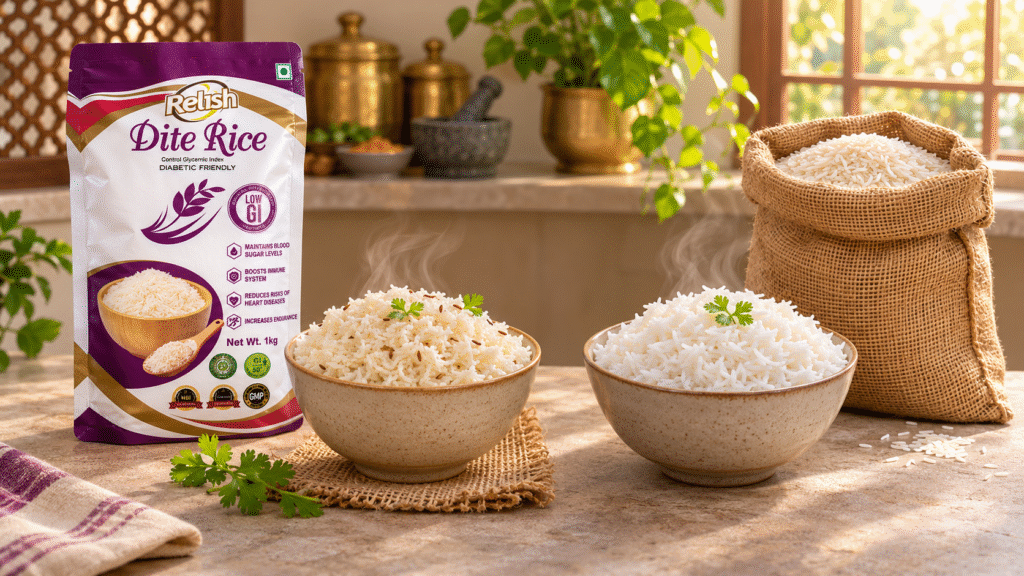
Rice is an essential part of everyday meals in Indian households. From traditional South Indian dishes to simple home-cooked meals, rice remains one of the most widely consumed staple foods. However, as people become more conscious of their dietary habits, many are exploring rice varieties that better suit their nutritional needs.
One option gaining attention is Relish Dite Rice, marketed as a low-glycemic-index (GI) alternative to regular rice.
But what makes Relish Dite Rice different from ordinary white rice? Is low-GI rice a better option for people monitoring their blood sugar? Can it be included in everyday meals?
In this guide, we explore the differences between Relish Dite Rice and regular rice, explain the importance of glycemic index, and discuss how to make informed choices when including rice in a balanced diet.
What Is Relish Dite Rice?
Relish Diet Rice, also labelled Relish Dite Rice on its packaging, is a rice product positioned for consumers who are mindful of their blood sugar levels and carbohydrate choices.
The product packaging highlights its low-glycemic-index positioning, making it an option worth considering for people exploring alternatives to conventional rice.
Unlike regular rice products, which are generally selected based on grain quality, texture, aroma, and cooking characteristics, Relish Dite Rice places additional emphasis on its glycemic-index properties.
However, it is important to remember that low-GI rice still contains carbohydrates. Portion size and overall meal composition remain important considerations.
What Is Regular Rice?
Regular rice refers to commonly consumed rice varieties used in everyday cooking, including white rice, Sona Masoori, Ponni, and different types of basmati rice.
White rice is typically produced by removing the outer husk, bran, and germ during processing. This creates a polished grain with a familiar texture and cooking quality.
Regular rice is a major source of carbohydrates and provides energy for daily activities.
However, different rice varieties can produce different blood sugar responses. Factors such as grain variety, processing, cooking methods, and portion size influence how rice affects blood glucose levels.
This is why the glycemic index can be useful when comparing carbohydrate-rich foods.
Relish Dite Rice vs Regular Rice: Key Differences
Although both products are rice, their positioning and intended dietary considerations differ.
| Feature | Relish Dite Rice | Regular Rice |
| Primary Focus | Marketed as a low-GI rice option | Everyday staple food |
| Glycemic Index | Packaging highlights a low-GI claim | Varies depending on rice variety and preparation |
| Blood Sugar Response | Intended as a lower-GI alternative | Can vary from relatively slow to rapid glucose response |
| Carbohydrate Content | Contains carbohydrates; check nutritional label | Contains carbohydrates |
| Everyday Cooking | Can be considered for regular rice-based meals | Commonly used in everyday meals |
| Dietary Considerations | Appeals to people monitoring carbohydrate quality | Suitable for a balanced diet with appropriate portions |
| Product Selection | Emphasis on glycemic-index positioning | Often selected for grain type, taste, texture, and price |
The most important difference is the product’s low-GI positioning, rather than an assumption that it contains no carbohydrates or significantly fewer calories.
What Is the Glycemic Index (GI)?
The glycemic index is a measurement that indicates how quickly a carbohydrate-containing food raises blood glucose levels compared with a reference food.
Foods are generally classified into three categories:
- Low GI: 55 or below
- Medium GI: 56–69
- High GI: 70 or above
Low-GI foods generally produce a slower rise in blood glucose than high-GI foods when compared under standardized testing conditions.
However, GI is only one aspect of nutrition. The total quantity of carbohydrates consumed, portion sizes, and foods eaten together also influence blood sugar responses.
Why Does GI Matter When Choosing Rice?
Rice contains starch, which is broken down into glucose during digestion.
The speed at which this occurs can vary depending on the characteristics of the rice.
For individuals monitoring their blood sugar levels, choosing suitable carbohydrate sources can be one part of an overall dietary plan.
Relish Diet Rice is marketed around this consideration through its low-GI claim.
Consumers who need an exact GI measurement should refer to the manufacturer’s latest validated product information.
Potential Benefits of Choosing Low-GI Rice
Choosing a verified low-GI rice variety may offer certain dietary advantages when combined with balanced meals and appropriate portion sizes.
1. Supports More Gradual Blood Sugar Responses
One of the primary reasons people explore low-GI foods is their tendency to produce a slower blood glucose response.
Replacing higher-GI carbohydrate foods with lower-GI alternatives may support blood glucose management as part of a balanced diet.
However, individual responses vary, and no rice variety can guarantee stable blood sugar levels.
2. Encourages Mindful Carbohydrate Choices
Many people focus on reducing sugar in beverages and desserts but pay less attention to carbohydrate-rich staple foods.
Choosing rice based on its nutritional characteristics can encourage greater awareness of overall carbohydrate intake.
Relish Dite Rice offers consumers an option to consider when reviewing their everyday rice choices.
3. Fits into Familiar Indian Meals
Rice is central to many Indian food traditions.
For people who enjoy rice regularly, exploring suitable rice varieties may be more practical than completely changing their usual meal patterns.
Relish Dite Rice can be considered for familiar rice-based dishes, subject to the cooking instructions provided on the pack.
4. Supports Balanced Meal Planning
Selecting lower-GI carbohydrate options can be one component of healthy meal planning.
Combining rice with vegetables, pulses, protein-rich foods, and appropriate amounts of healthy fats can help create a more balanced meal.
The overall nutritional quality of the meal matters more than the glycemic index of one ingredient alone.
Is Relish Dite Rice Better Than Regular Rice?
The answer depends on individual dietary preferences, nutritional requirements, and health goals.
Regular rice can be part of a healthy diet, especially when consumed in suitable portions alongside vegetables, pulses, and other nutritious foods.
Relish Dite Rice may appeal to people specifically looking for a product marketed as low GI.
However, a low-GI claim does not automatically mean that a food is:
- Carbohydrate-free
- Sugar-free
- Low in calories
- Suitable for unlimited consumption
- A treatment for diabetes
A complete comparison should also consider the product’s nutritional information, verified GI value, portion size, and preparation method.
For individuals managing diabetes or another medical condition, personalized dietary guidance from a qualified healthcare professional remains important.
Who Can Consider Relish Dite Rice?
Relish Dite Rice may be of interest to different groups of consumers.
People Monitoring Blood Sugar
Individuals paying attention to blood glucose responses may wish to explore verified lower-GI carbohydrate options.
They should still account for the carbohydrate quantity in each serving and follow their healthcare professional’s dietary recommendations.
Health-Conscious Families
Families looking to make more informed food choices may consider rice varieties with clearly documented nutritional characteristics.
Individuals Following Balanced Diet Plans
People focusing on portion control, meal quality, and healthier carbohydrate choices may be interested in comparing conventional rice with low-GI alternatives.
Regular Rice Consumers
Those who eat rice frequently can explore different rice varieties based on taste, cooking suitability, nutritional characteristics, and individual preferences.
How to Include Relish Dite Rice in a Balanced Diet
Choosing a rice variety is only one part of healthy eating.
These simple practices can help create balanced meals.
1. Pay Attention to Portion Sizes
Even low-GI rice contains carbohydrates.
Serving size should be based on individual nutritional needs, activity levels, and overall meal composition.
2. Combine Rice with Vegetables
Including vegetables adds variety, fibre, and important nutrients to meals.
3. Add Protein-Rich Foods
Pairing rice with dal, beans, curd, eggs, paneer, fish, or other suitable protein sources can make meals more nutritionally balanced.
4. Follow Proper Cooking Instructions
Cooking methods can influence rice texture and its nutritional characteristics.
Follow the instructions provided on the product packaging for the best preparation results.
5. Maintain Overall Dietary Balance
Rather than focusing exclusively on one ingredient, consider the nutritional quality of the complete meal.
A balanced diet includes appropriate portions of carbohydrates, protein, vegetables, fruits, and other nutrient-rich foods.
How to Choose Between Relish Dite Rice and Regular Rice
When selecting rice for everyday consumption, consider the following factors:
Glycemic Index: If GI matters to your dietary requirements, look for reliable testing information rather than relying only on general descriptions.
Nutritional Information: Compare carbohydrates, calories, fibre, and other nutrients using the product labels.
Cooking Preferences: Consider the rice variety, cooking instructions, texture, and suitability for your favourite dishes.
Portion Requirements: Determine how much rice fits into your overall dietary plan.
Personal Health Needs: Consult a healthcare professional if you require specific dietary guidance for diabetes or other medical conditions.
Making an informed choice involves considering both product characteristics and individual nutritional requirements.
Frequently Asked Questions About Relish Dite Rice
1. What is the main difference between Relish Dite Rice and regular rice?
Relish Dite Rice is marketed as a low-glycemic-index rice option, while regular rice includes various grain types with different GI values. The actual nutritional differences should be confirmed using product-specific information.
2. Is Relish Dite Rice suitable for people with diabetes?
The packaging describes the product as diabetes-friendly. However, people with diabetes should not assume that any rice can be eaten without restrictions. Carbohydrate quantity, serving size, blood glucose response, and individual medical advice remain important.
3. Does Relish Dite Rice contain carbohydrates?
Yes. Relish Dite Rice is still a rice product and contains carbohydrates. Its exact carbohydrate content should be checked on the nutritional label.
4. Can Relish Dite Rice be eaten every day?
Rice can be included in everyday meals as part of a balanced diet. The appropriate quantity depends on an individual’s nutritional requirements and health considerations.
5. Is regular white rice always high GI?
No. The glycemic index of rice varies depending on the variety, processing, and preparation method. Some types of rice have lower GI values than others.
6. Does low-GI rice help with weight loss?
Low GI does not necessarily mean low calorie. Weight management depends on overall calorie intake, nutritional balance, activity levels, and other factors. Low-GI rice should not be considered a weight-loss product without supporting evidence.
7. Can Relish Dite Rice replace regular rice in meals?
It may be used as an alternative in rice-based meals, depending on personal taste and the preparation instructions. Consumers should review the packaging for product-specific cooking guidance.
Conclusion
Rice remains an important part of Indian food culture, and choosing the right variety depends on personal preferences and nutritional needs.
The main distinction between Relish Dite Rice and regular rice is the emphasis on low-glycemic-index positioning. While conventional rice varieties differ in their glycemic characteristics, Relish Diet Rice is marketed to consumers seeking a lower-GI option.
However, choosing low-GI rice does not eliminate the need for portion control or balanced eating.
Understanding glycemic index, checking nutritional labels, and maintaining appropriate meal portions can help consumers make more informed dietary decisions.
Explore Relish Dite Rice for Your Everyday Meals
Looking for an alternative to your usual rice?
Relish Dite Rice offers a low-GI-focused option for consumers who want to be more mindful of their everyday carbohydrate choices.
Explore the product, review its nutritional information, and discover whether it fits your family’s meal preferences and dietary requirements.
Choose thoughtfully. Eat mindfully. Make every meal count.